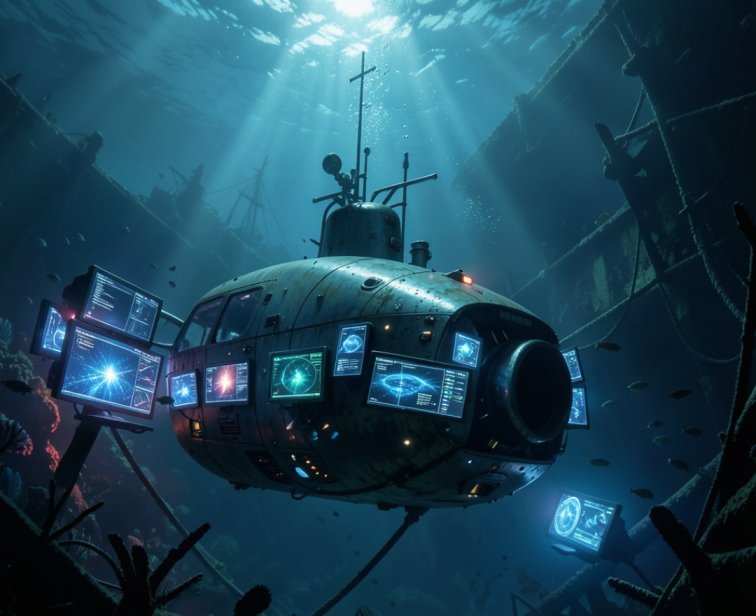
As of February 3, 2026, the deep ocean is no longer a “dark zone” for autonomous intelligence. Researchers at Khalifa University, in collaboration with Dubai Future Labs, have officially launched RoboGenAI. This revolutionary technology allows underwater robots to do more than just record video; it allows them to understand what they are seeing in real-time.
Traditionally, underwater drones collected data that had to be analyzed by humans hours or days later. RoboGenAI uses a “Generative-Analytical Hybrid” model that lets the robot detect patterns—such as a structural weakness in an oil rig or a rare biological shift in a coral reef—and respond immediately without waiting for instructions from the surface.
Why this matters for 2026:
- Continuous Awareness: Robots can now stay submerged for months, managing their own “attention” based on what they discover.
- Environmental Impact: This is being deployed immediately to track “Marine Darkwaves”—sudden ocean blackouts that threaten sea life.
- Economic Efficiency: Real-time underwater monitoring will reduce the cost of maintaining subsea internet cables by an estimated 30%.