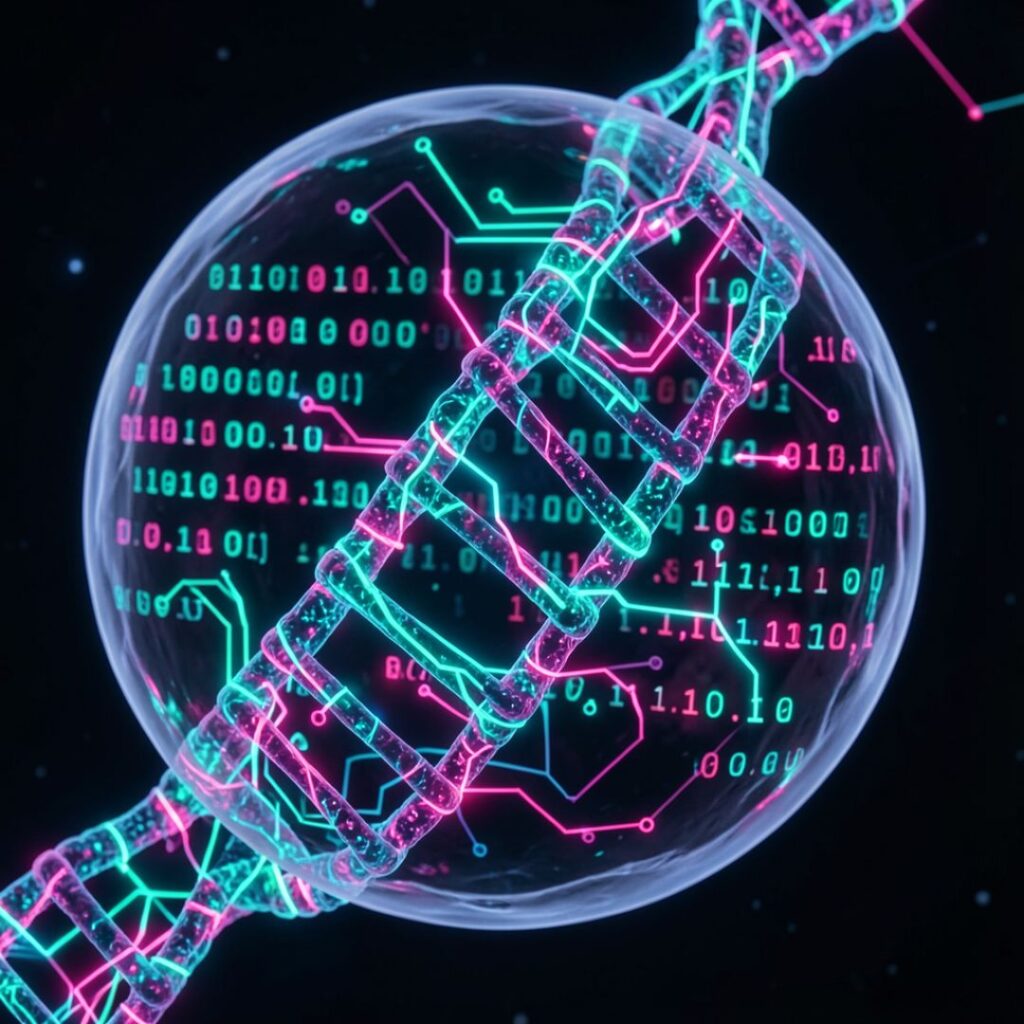
The field of Synthetic Biology has officially transitioned from simple genetic modification to full-scale Bio-Digital Integration. In 2026, the breakthrough lies in the successful implementation of Boolean logic gates (AND, OR, NOT) inside eukaryotic cells. This allows us to treat living tissue not just as a biological entity, but as a sophisticated, programmable “wetware” computer.
The Architecture of Biological Logic: At the molecular level, these logic gates are constructed using CRISPR-Cas complexes and synthetic RNA “triggers.” For example, an “AND” gate can be programmed to trigger a specific cellular response only when two distinct chemical biomarkers are present simultaneously. This precision prevents the “accidental” activation of treatments, which has been the primary cause of side effects in traditional pharmacology.
The Era of Autonomous Therapeutics: This technology enables the creation of “Smart Cells” that act as internal sentinels. When these cells detect a specific protein signature (Input A) and a specific pH imbalance (Input B), they execute a command to synthesize and release a localized medicinal payload. Once the conditions return to baseline, the “NOT” gate shuts down production. This Closed-Loop Bio-Feedback represents the holy grail of precision medicine: a treatment that only exists when and where it is needed.
Living Data Storage and Volumetric Density: Beyond medicine, we are seeing the rise of DNA-based Data Archiving. Because DNA is three-dimensional and incredibly stable, it offers a volumetric density that dwarfs silicon. A single gram of synthetic DNA can theoretically store 215 petabytes of data. In 2026, we are beginning to see “Living Archives”—biological organisms that carry the world’s most important digital information within their non-coding DNA, protected from electromagnetic pulses and hardware decay.