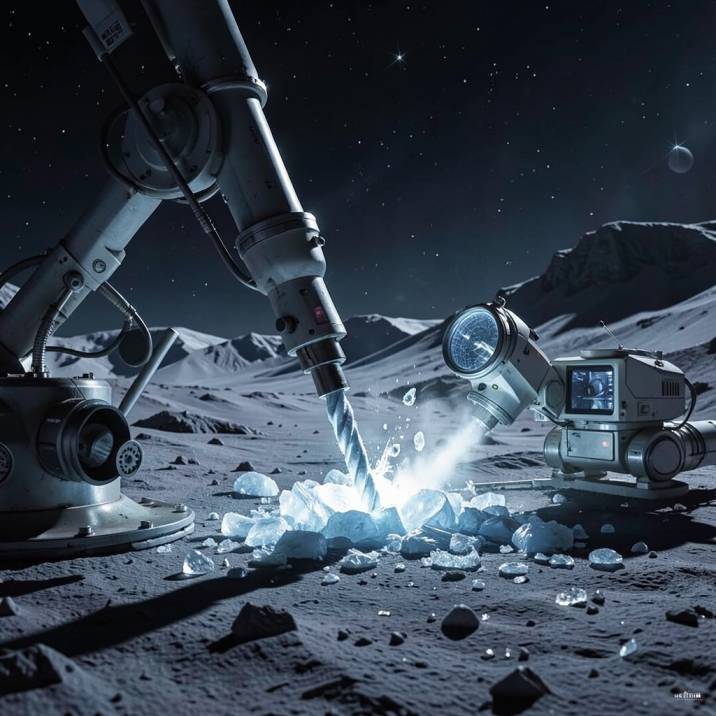
The moon is no longer just a destination for flags and footprints; it has officially become an industrial frontier. As of February 2026, the race for lunar resources—specifically water ice—has shifted from scientific curiosity to a full-scale commercial “gold rush.”
The Shackleton Crater Conflict The primary target is the Shackleton Crater at the lunar South Pole. Because parts of this crater are in permanent shadow, they hold billions of tons of water ice that hasn’t seen sunlight in billions of years. This ice is more valuable than gold in space. Why? Because water can be split into hydrogen and oxygen to create rocket fuel.
Instead of launching heavy fuel from Earth (which is incredibly expensive), companies like Blue Origin and SpaceX plan to use the Moon as a “gas station” for missions to Mars.
The Legal Grey Area This surge in activity has created a diplomatic headache. The 1967 Outer Space Treaty says no nation can own the Moon, but it doesn’t clearly address private companies extracting resources. In early 2026, we are seeing the first “Resource Claims” being filed by private entities, leading to calls for a new UN-led Lunar Accord.
Why this matters for your portfolio:
- Infrastructure Plays: Companies building autonomous ice-drills and lunar power grids are seeing record investment.
- Geopolitics: The “Artemis Accords” are being used to establish “Safety Zones” around mining sites, effectively creating the first lunar borders.